You know, these plastic packaging bags manufacturers… honestly, it's a world of its own. I've been on construction sites for fifteen years, and you wouldn't believe the stuff I've seen go into them. Dust, rain, sometimes even entire lunches. Seems simple, right? A bag to hold stuff. But it’s never simple.
Lately, everyone’s screaming about sustainability, which is good, don’t get me wrong. But it translates into wanting these bio-based plastics, and lemme tell ya, those are… tricky. They look good on paper, but handle ‘em on a muddy site, and they’re just not the same. You need something that'll survive being thrown around a truck bed, piled under rebar, and generally abused. Have you noticed how everything has to be "eco-friendly" these days? It’s a good goal, but practicality still matters.
And the demand for customized sizes… that’s gone through the roof. Every project wants something slightly different. Slightly wider, slightly thicker, a different color… it adds up. It's all about protecting the goods, naturally.
The Ever-Changing Landscape of Plastic Packaging
It’s funny, you see these big industry reports, and they talk about market growth and technological advancements, but down here, on the ground, it's about solving the immediate problem: keeping the stuff dry. Strangel,y, the biggest trend isn’t a new material, it’s the sheer volume of stuff needing to be packaged. Everything is pre-fabricated now, delivered in pieces, and that means more plastic packaging.
And it’s not just construction. I was talking to a guy from a furniture factory last week – same story. Flatpack furniture, fragile components… they’re drowning in packaging too. It's a global thing, and the demand for better plastic packaging bags manufacturers is only going up.
Design Pitfalls: What Seems Obvious Isn’t
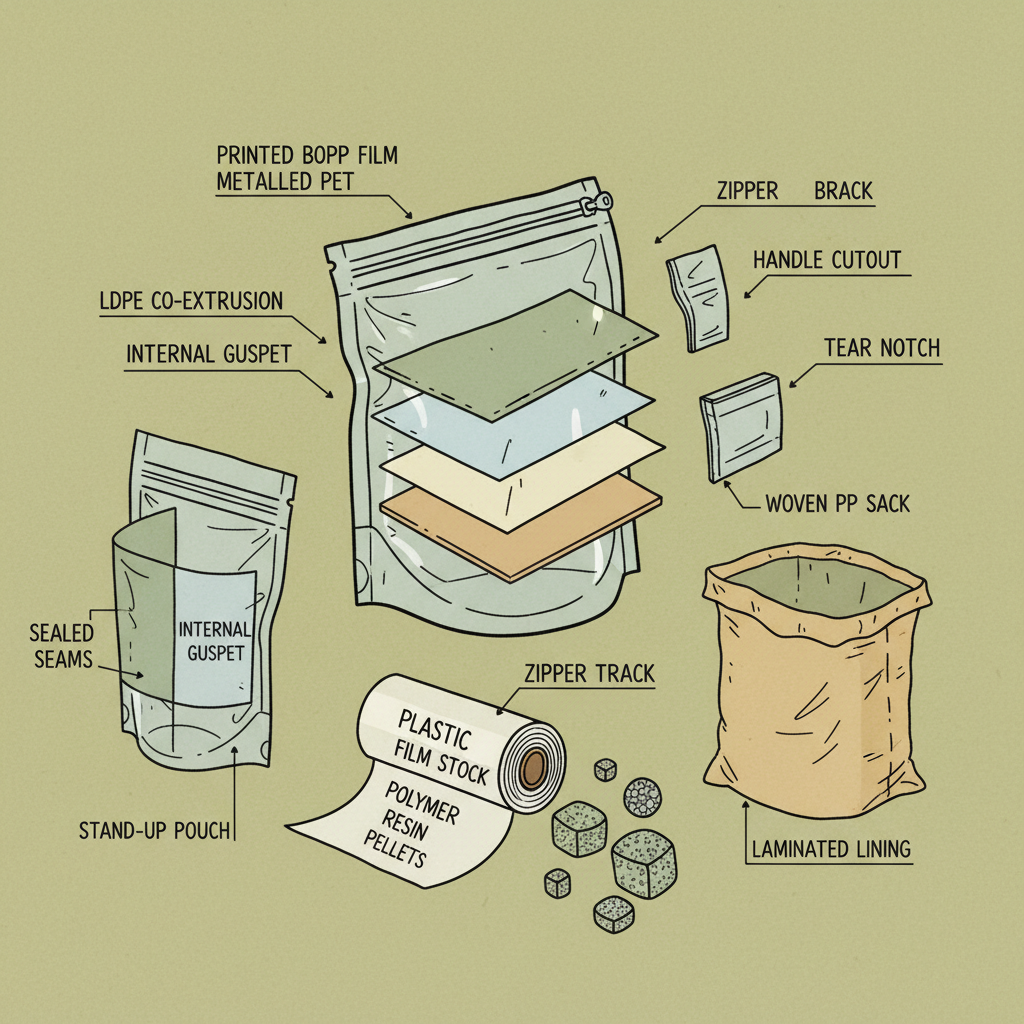
You’d think designing a plastic bag is simple, right? Wrong. I encountered this at a factory in Ningbo last time. They’d designed a bag that looked perfect, nice and square, but didn’t account for the weight distribution when it was full. The handles ripped right off. Simple things, like the thickness of the plastic, the gusset width, the seal strength – they all matter.
Another common mistake? Ignoring the stacking issue. If you’re shipping pallets of these bags, they need to be able to stack without collapsing. It sounds basic, but you’d be surprised how often it’s overlooked. We found out the hard way when a whole shipment got crushed in transit.
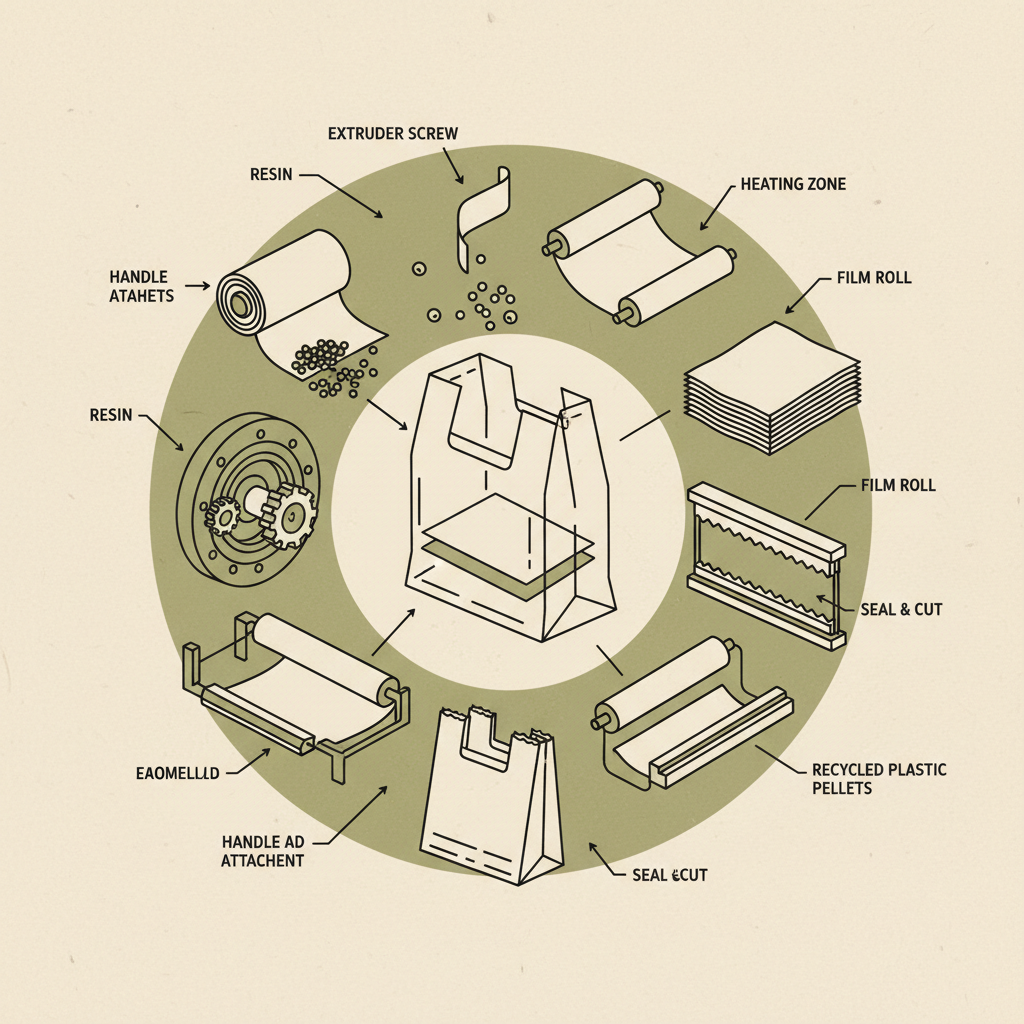
And then there's the sealing. Heat sealing, impulse sealing… each has its pros and cons. Get the temperature wrong, and you’ve got a bag that splits open. Get the pressure wrong, and it’s a mess. It's a subtle art.
Material Matters: From LDPE to Bio-Based
LDPE (Low-Density Polyethylene) is still the workhorse, you know? It’s tough, flexible, and relatively cheap. You can smell it, that kind of plasticky odor. It gets the job done, even if it isn’t glamorous. We use a lot of it for general construction materials – lumber, tiles, drywall.
HDPE (High-Density Polyethylene) is for the heavier stuff, the things that need extra strength. Feels a little more rigid, a little less… pliable. We use it for packaging heavier tools, metal components, and things like that. It's a little more expensive, but worth it when you need that extra durability. Honestly, you can tell the difference just by feeling the plastic – it's denser.
But now you’re seeing all these bio-based plastics… PLA, PHA, all sorts of fancy names. They feel different. A bit more brittle, sometimes a bit sticky. They’re promising, but they haven’t fully replaced the traditional plastics yet, especially for heavy-duty applications. I've heard good things about PHA, but it’s still pretty pricey.
Real-World Testing: Beyond the Lab
Labs are fine for tensile strength and tear resistance, but that doesn't tell you what happens when a forklift goes through a pallet of bags. To be honest, the best testing is just throwing stuff at them. Okay, not literally throwing stuff at them, but simulating real-world conditions.
We have a drop test where we drop fully loaded bags from a height of a few feet onto concrete. Sounds simple, but it reveals a lot. We also do a compression test, stacking pallets of bags and seeing how much weight they can handle before collapsing. And yeah, sometimes we deliberately poke holes in them with sharp objects. You gotta know what they can withstand.
Plastic Packaging Bags Manufacturers Performance Metrics
How They’re Actually Used: Surprises on Site
You think you know how people are going to use your packaging, but you're often wrong. I’ve seen guys use these bags as temporary shelters from the rain, as kneepads, even as makeshift tool carriers. They improvise.
One thing I’ve noticed is that the smaller bags are often repurposed for storing screws, nails, and other small parts. It's a convenient way to keep things organized on the job site. The larger bags? They mostly get ripped open and tossed, unfortunately. Anyway, I think its important to realize this.
The Good, The Bad, and the Customizable
The biggest advantage is cost, obviously. Plastic is still relatively cheap compared to other packaging materials. And it’s versatile. You can tailor it to almost any application. The biggest downside? The environmental impact. We're trying to mitigate that with recycled content and bio-based options, but it’s an ongoing battle.
But the real sweet spot is customization. We had a client who needed bags with a specific tear notch – a little perforated line that allowed them to open the bag easily without tools. It sounds simple, but it made a huge difference for their assembly process. We do custom printing too, of course, but it's the functional customizations that really add value.
They're pretty robust, generally, if you use the right gauge material. But don’t expect miracles. Sharp edges will still go through, and excessive weight will still cause problems. It’s a bag, not a vault.
A Shenzhen Story: and Regret
Last month, that small boss in Shenzhen who makes smart home devices insisted on changing the interface to , and the result was… chaos. He wanted the packaging bags to have a custom opening designed around the new port size. It sounded simple enough, but the tooling costs were insane, and the bags ended up being more expensive than the devices themselves! He learned the hard way that sometimes, sticking with the standard is the best option. Later… forget it, I won’t mention it.
He ended up having to redesign the whole packaging line, and he was not a happy man. It was a classic case of over-engineering. Sometimes, the simplest solution is the best solution.
It really illustrates the need for open communication and a thorough understanding of the client's needs. You can't just blindly follow their instructions; you have to challenge them and offer your expertise.
A Summary of Key Material Properties
| Material Type |
Strength/Durability (1-5) |
Cost (Low/Medium/High) |
Environmental Impact |
| LDPE |
3 |
Low |
Moderate |
| HDPE |
4 |
Medium |
Moderate |
| Bio-PLA |
2 |
High |
Low |
| Recycled LDPE |
3 |
Medium |
Low |
| Bio-PHA |
3.5 |
Very High |
Very Low |
| Reinforced LDPE (with woven fabric) |
5 |
Medium-High |
Moderate |
FAQS
Honestly, it’s balancing cost and performance. Bio-plastics are often more expensive and don’t offer the same level of durability as traditional plastics. Finding materials that meet both requirements, and aren’t wildly overpriced, is the real challenge. Plus, the supply chain for these materials isn't always reliable. It’s a constant trade-off.
Crucially important! The gauge dictates the bag’s strength and resistance to tearing. Too thin, and it’ll rip easily. Too thick, and you’re wasting material and increasing costs. We usually recommend a minimum of 1.5 mil for general purpose bags, but it really depends on the weight and type of product being packaged. Get that wrong, and you’re in trouble.
For long-term storage, you want a heat seal. It creates a much stronger and more permanent bond than other types of seals. Impulse sealing is okay for shorter-term storage, but it’s more prone to failure over time. Make sure the seal is consistent and airtight to protect the contents from moisture and contamination.
Absolutely! We can customize the color to match your brand or specific requirements. However, keep in mind that custom colors often come with a minimum order quantity and may increase the cost. Darker colors can also be more prone to heat buildup during sealing, so we need to consider that as well.
LLDPE (Linear Low-Density Polyethylene) is similar to LDPE, but it’s more flexible and has better tensile strength. It’s often used for stretch film and heavy-duty bags. It’s a little more expensive than LDPE, but it offers improved performance. To be honest, a lot of people don’t even notice the difference unless they’re really looking for it.
We use a combination of thicker gauge plastic and reinforced handles or gussets. We also perform drop tests and compression tests to simulate real-world conditions. We can also offer custom-designed bags with additional reinforcement if needed. It all comes down to understanding the weight and dimensions of the items being packaged.
Conclusion
So, where does this all leave us? Plastic packaging bags manufacturers aren't glamorous, but they’re essential. They’re a critical part of the supply chain, and they have a bigger impact on our daily lives than most people realize. We've seen the industry evolve, from simple LDPE bags to more sustainable and customizable options.
Ultimately, whether this thing works or not, the worker will know the moment he tightens the screw. We strive to provide quality, reliable packaging that protects goods and simplifies logistics. But it’s the guys on the ground, dealing with the dirt and the demands of the job, who ultimately decide if it’s good enough. And that's what keeps us coming back to the drawing board, day after day.